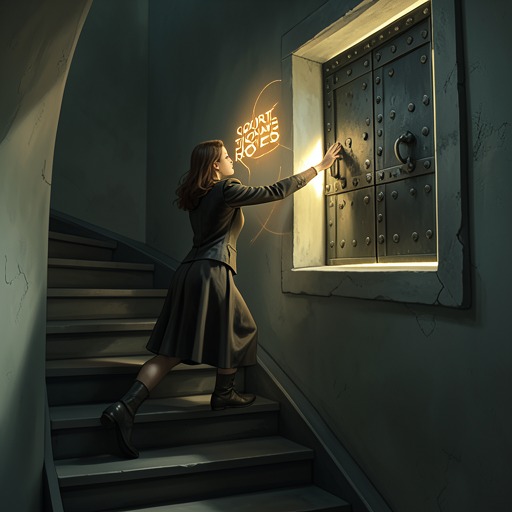
Third Trial: Execution of Three Faeries
A Court of Thorns and RosesThe Third Trial: Execution of Three Faeries is the climax of Amarantha’s public ordeal for Feyre Archeron beneath the mountain. It is designed not merely to test whether Feyre can survive, but to force her into an impossible collision between obedience, compassion, love, and the political liberation of Prythian. By making murder the price of victory, Amarantha turns the rules of the trial into a weapon against Feyre’s moral identity; by concealing Tamlin among the condemned, she also makes recognition itself the final test.
Causes and Background
The trial takes place within the larger system of captivity and spectacle maintained by Amarantha. Feyre has already been made to endure danger before an audience, while Amarantha’s authority depends on controlling information, setting the terms of each contest, and making life and death appear to be matters of personal choice. The final trial therefore extends the earlier structure of the games but changes its central demand. Feyre is no longer asked only to fight or solve a problem. She is asked to become the executioner.
The contrast with the seasonal rites of Prythian sharpens the trial’s meaning. During Calanmai, the Great Rite is described as a communal exchange through which the magic of the seven High Lords returns to the earth and regenerates life. Its violence is ritualized as renewal. Amarantha’s final test perverts that pattern: death is detached from regeneration and placed inside a coercive performance, where innocent bodies become instruments of domination. The trial’s atmosphere belongs to the same world of public ceremony, crowds, and concentrated power, but its purpose is not to restore life. It is to make survival feel morally indistinguishable from corruption.
The Command and the Weapons
Amarantha brings three hooded faeries into the throne room, two male and one female, and has them dragged before the dais. Their sacks conceal their faces, preventing Feyre from identifying them and withholding the personal knowledge that might make refusal or mercy possible. The guards force the prisoners to their knees while the crowd watches, turning their helplessness into a public display.
The weapons make the command unmistakably ceremonial as well as lethal. Black-clad servants present dark velvet pillows, each bearing a single polished wooden dagger. The blades are made of ash rather than metal. Amarantha orders Feyre to stab each prisoner in the heart, while offering refusal as a supposedly fair alternative: Feyre may decline, but Amarantha will take her life instead. The language of bargaining disguises the coercion. The choice is formally hers, yet every available outcome has been arranged by Amarantha, and the innocent prisoners are made to bear the cost of the ruler’s game.
The Executions and Recognition
Feyre kills the first young faerie with a ragged sob. The ash dagger passes through flesh and bone as though it were metal; blood covers her hand, and the victim’s shocked, hateful eyes remain fixed on her as he collapses. The physical ease of the weapon intensifies the moral horror. Nothing about the dagger’s material weakness protects Feyre from the act. The crowd’s keening response makes the murder communal, but the guilt remains lodged in her body and memory.
The second victim, a young female faerie, gives the scene a different kind of resistance. She tells Feyre to let her enter eternity and whispers, “Fear no evil. Feel no pain.” The words echo the fixed expression Fear no evil. Feel no pain and transform the condemned woman’s final moment into a deliberate attempt to steady the person who is about to kill her. Feyre grips her shoulder and drives the dagger into her heart. Afterward, she retreats psychologically from what she has done, describing herself as having gone far away from herself. The execution therefore produces not only external violence but a rupture in Feyre’s sense of who she is.
Before Feyre can take the third dagger, the guard removes the hood from the remaining prisoner. Amber-flecked green eyes look up at her: the condemned faerie is Tamlin. At the same moment, the Tamlin seated beside Amarantha is revealed to be the Attor, whose transformation exposes the deception. The disclosure changes the trial from a sequence of executions into a test of recognition and courage. Feyre understands that Amarantha would not truly risk allowing her to kill Tamlin, because Tamlin’s heart has been turned to stone and cannot be pierced by a blade. The apparent trap contains the condition of its own failure.
Feyre nevertheless chooses to act. Remembering that Tamlin had a heart of stone, and recognizing that the curse depends on the possibility that she has heard and understood its terms, she says, “I love you,” and stabs him. The ash blade pierces flesh and bone, and for a moment she believes it may pass completely through him. Her action is simultaneously an act of love, an act of apparent murder, and the completion of the test that Amarantha has tried to control.
Consequences and Aftermath
The stabbing initiates the final reversal of Amarantha’s power. Feyre’s body is later killed, but Tamlin’s reaction reveals that the trial has not ended in the manner Amarantha intended. After Feyre’s death, Tamlin turns against the queen, shifts into his beast form, and attacks her. When Amarantha retreats from Feyre’s corpse and whispers “Please,” golden light explodes, blasting her into the wall. Tamlin seizes her by the neck and begins the violent confrontation that leads to her defeat.
Feyre’s own death is followed by a passage through darkness bordered with gold and a return toward Tamlin and life. She awakens on the cold floor of the throne room, alive, with no blood, broken bones, or mortal wound. Her resurrection transforms the trial’s meaning once again. The final victim was not simply sacrificed; the act fulfilled the hidden condition through which the curse could be broken, while Feyre’s death becomes the threshold of her rebirth as High Fae.
The victory does not erase the executions. In the quiet aftermath, Feyre places a hand on Tamlin’s heart and hears its steady beat, but she cannot look away from the truth of what happened. She remembers that she killed and slaughtered the two faeries, and she had not even seen their bodies carried away. The throne room has dissolved into chaos: the Attor, Amarantha’s more vicious followers, Lucien’s brothers, and others flee or disappear, while some faeries celebrate and others remain pale, distant, or unable to believe that liberation is real. Political freedom arrives alongside an unprocessed moral wound.
Narrative Significance
The Third Trial: Execution of Three Faeries brings together the book’s recurring structures of bargain, sacrifice, concealment, and transformation. Amarantha treats the trial as a controlled contest, but her rule depends on a false belief that every participant can be reduced to a role within her spectacle. Feyre’s compassion makes the first two killings devastating, while her recognition of Tamlin exposes the limits of Amarantha’s control. The queen can dictate the command, the weapons, the prisoners, and the audience; she cannot fully determine what Feyre understands the command to mean.
The event also gives the story’s romantic declaration its most dangerous form. Feyre’s “I love you” is not a retreat from violence but the condition through which she enters it without surrendering the meaning of her action to Amarantha. Yet the narrative refuses to make that choice clean. Love breaks the curse and helps liberate Prythian, while the innocent deaths remain real and continue to haunt Feyre. The trial’s decisive significance lies in that unresolved contradiction: salvation is achieved through an act that permanently damages the person who achieves it.